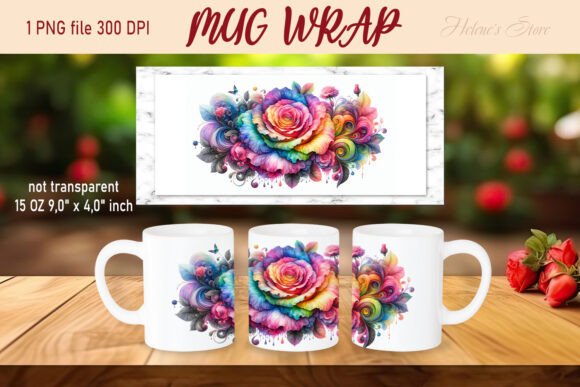
Rainbow Roses Floral Pattern Mug Wrap
First Impression: Joyful, Bold, and Unapologetically Bright
When I opened the Rainbow Roses Floral Pattern Mug Wrap, my immediate thought wasn’t “cute” or “trendy”—it was “this wants to be seen.” The design bursts with saturated gradients, layered petal shapes, and a rhythmic floral rhythm that feels both playful and intentional. It’s not delicate lacework or minimalist line art—it’s confident, generous in scale, and built for impact. As an embroidery designer who tests hundreds of digital embroidery files each year, I appreciate how clearly this pattern communicates mood: optimism, celebration, warmth. It leans into joy without tipping into kitsch—largely because the rose forms retain botanical suggestion, even amid the rainbow treatment.
A Real-World Test: Embroidering It onto a Linen Tea Towel
Last week, I used the Rainbow Roses Floral Pattern Mug Wrap as the centerpiece for a set of embroidered kitchen towels destined for a local boutique’s spring launch. Not as a mug wrap—no, I adapted it. I resized it to fit a 4" × 6" hoop, simplified two outer stems to reduce stitch density, and chose matte cotton thread over glossy polyester to soften the vibrancy just enough for textile context. The result? A tactile, heirloom-feel piece where the roses read clearly at arm’s length *and* reward closer inspection—the satin-stitched petals held their shape, the fill-stitch centers didn’t puddle, and the curved lines flowed naturally across the linen’s subtle texture. Customers loved the handmade authenticity—not just the colors, but the *intentionality* behind them.
Where It Shines (and Where It Needs Thought)
The Rainbow Roses Floral Pattern Mug Wrap excels on stable, medium-weight fabrics: cotton twill aprons, canvas tote bags, structured baby blankets, and even lightweight sweatshirts when stabilized well. Its balanced negative space lets stitches breathe, and its moderate detail level avoids the “thread soup” trap common in overly dense floral files. On Etsy, I’ve seen sellers pair it beautifully with neutral backgrounds—think oatmeal-colored tea towels or charcoal-gray caps—to let the rainbow do the talking.
But here’s where attention matters: avoid using it full-size on stretchy knits (like jersey tees) without significant digitizing tweaks—those curves can distort under tension. Tiny hoops (under 3") will lose definition in the inner stamens and fine leaf veins. And on dark fabric? Test thread contrast early. Some rainbow palettes fade visually if the base is navy or black; switching to high-contrast white or cream underlay threads often saves the clarity.
What It Adds to Your Finished Product
- Visual appeal: Instant uplift—ideal for seasonal collections, birthday gifts, or boutique window displays.
- Stitching clarity: Clean vector-derived outlines translate well to embroidery, especially when digitized with thoughtful stitch direction changes.
- Product value: Feels premium without requiring complex techniques—no appliqué layers or specialty needles needed.
- Customer trust: When stitched cleanly, it signals care and craftsmanship—not mass-produced filler.
- Brand consistency: Works equally well for whimsical small shops and polished lifestyle brands, depending on fabric and thread choices.
Practical Designer Notes Before You Stitch
Before committing to your first run—whether for a client order, craft fair batch, or Etsy listing—here’s what I always do with a new digital embroidery file like the Rainbow Roses Floral Pattern Mug Wrap:
- Run a test on scrap fabric *exactly matching* your final substrate—linen vs. terry cloth vs. poly-cotton behave very differently.
- Check thread color contrast in natural light *and* under store lighting. Rainbow doesn’t mean “all colors must show”—some hues may blend if adjacent threads are too similar in value.
- Review stitch density in the petal clusters. If your machine flags high density warnings, consider reducing fill stitch percentage by 5–10% or adding strategic running-stitch breaks.
- Confirm hoop size compatibility. This design reads best at 4" minimum—if you’re working with a 3.5" cap hoop, simplify or reposition elements to avoid crowding.
- Inspect small details in black-and-white mockups. Does the design hold up in monochrome? That tells you whether silhouette and spacing carry weight beyond color.
- Use cutaway stabilizer for woven fabrics, tear-away for knits—and always baste first. The floral curves demand stability, not slippage.
- Verify licensing. Since this is listed as a Graphics product in the Crafts category, confirm whether commercial use (e.g., selling finished embroidered totes) is permitted—or if redistribution of the digital file itself is restricted.
Final Thought: A Design That Earns Its Place
The Rainbow Roses Floral Pattern Mug Wrap isn’t just another floral motif—it’s a conversation starter, a mood-setter, and a reliable workhorse for makers who value both aesthetic resonance and technical practicality. It won’t solve every embroidery challenge (no single design can), but it consistently delivers clarity, charm, and commercial viability when matched thoughtfully to fabric, purpose, and audience. Whether you’re stitching personalized baby onesies for a friend, building a cohesive line of embroidered kitchen goods, or sourcing standout design assets for your craft business, this one earns its spot in your library—not because it’s flashy, but because it *works*. And in the world of handmade product creation, that’s the highest compliment of all.